Field Notes 5. – RHIZOM
Roots, labour, memory
There are places that stay with you long after you have left them.
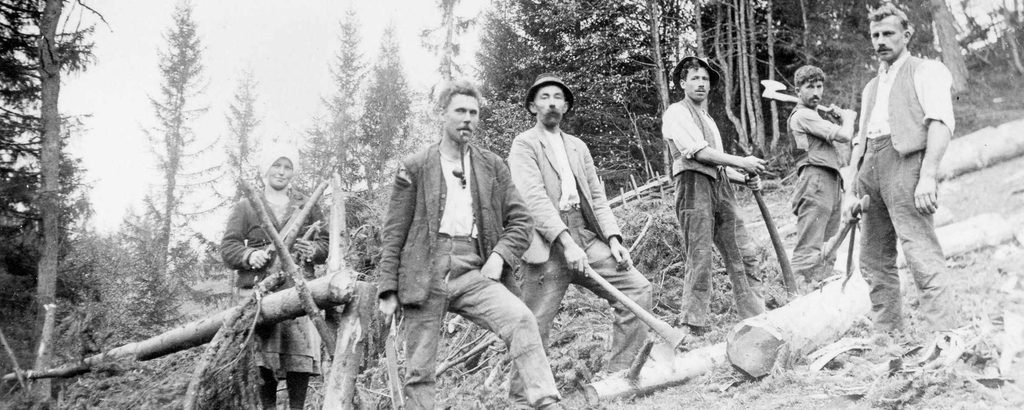
For me, that place is the region around the Salza River in northern Styria. The forests, the steep mountains, the water, the traces of work — they were simply part of the landscape I grew up with. When I began my diploma project, I knew I wanted to work with this place, but I didn’t yet know what I was looking for.
I started with too many things: water, forests, people, traditions, history.
It was my grandmother who helped me find the thread.
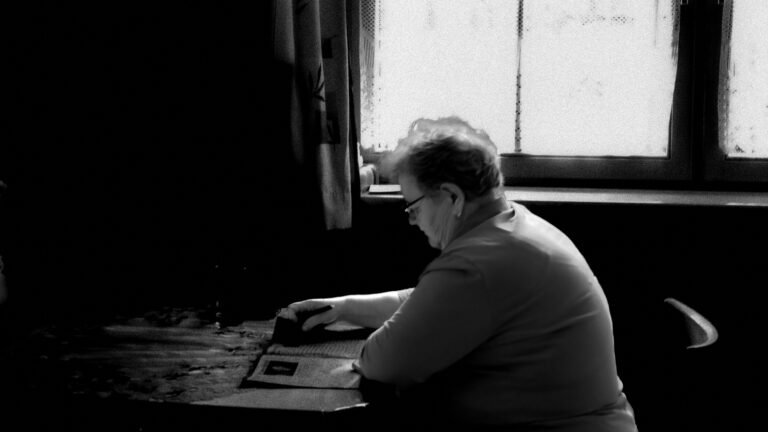
Sitting in her kitchen, over coffee, she began telling me about the past. About work, about the people who lived in these forests, and about the women who followed the men into the mountains to earn something of their own.
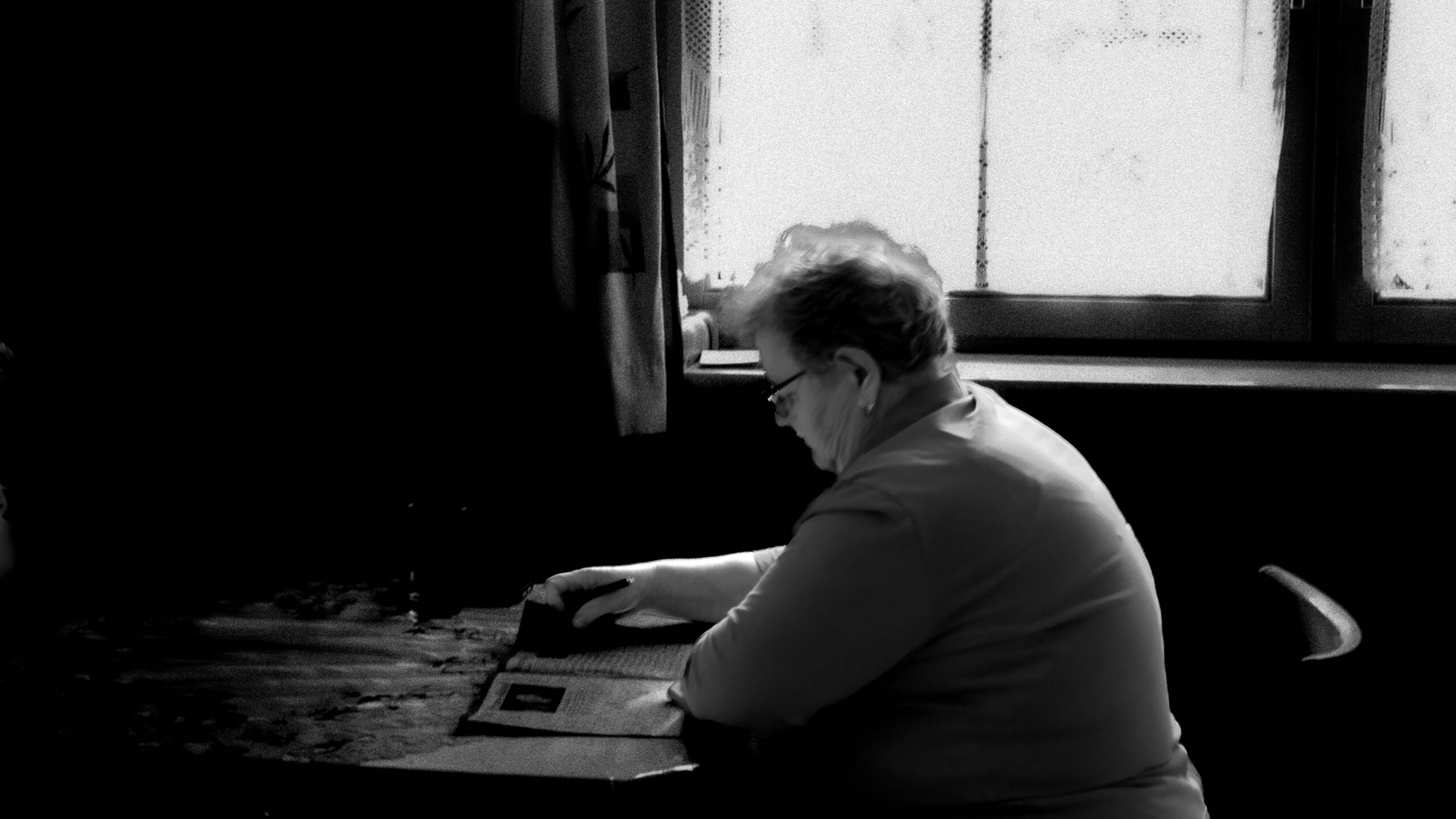
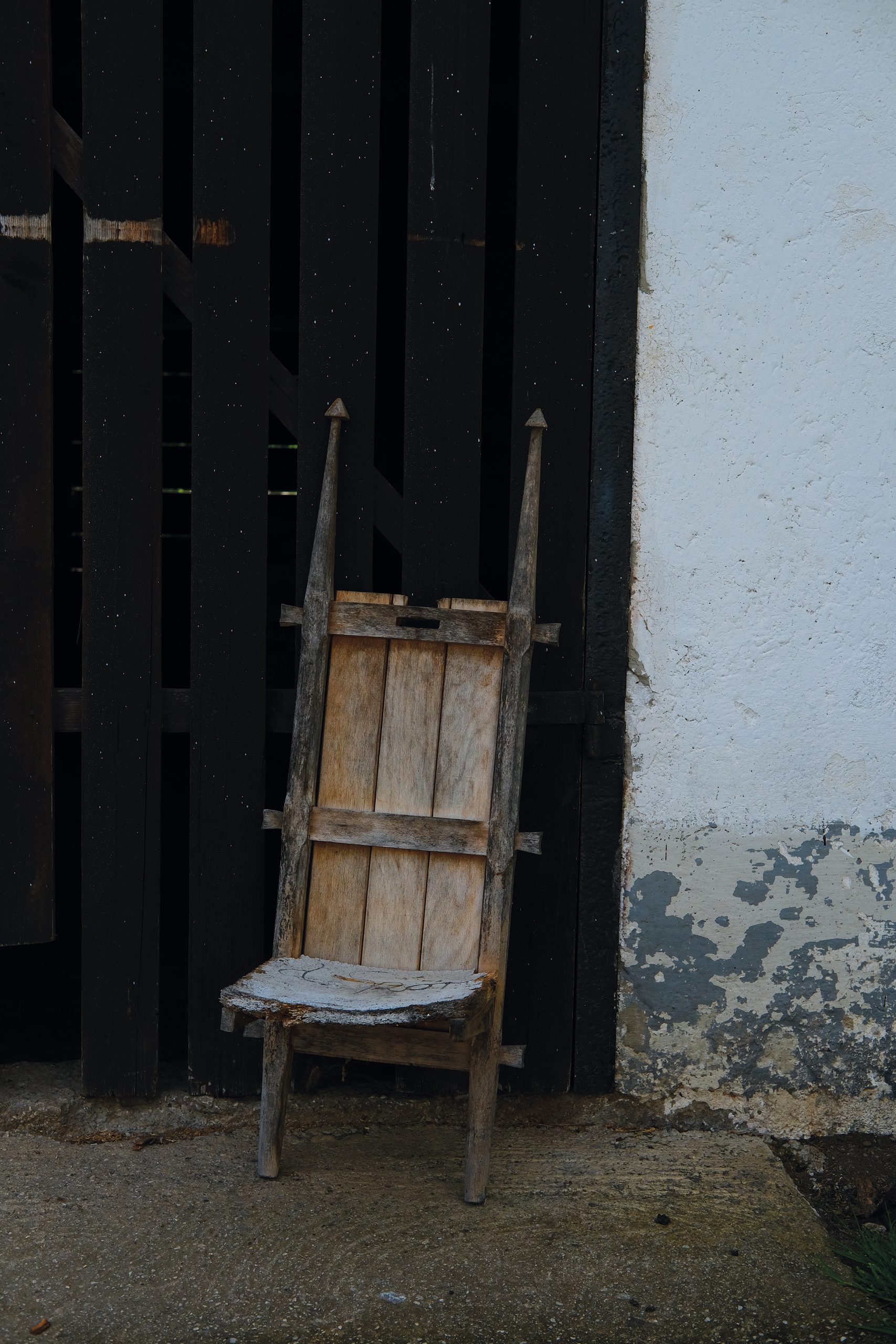
One of these women was Josefa Meschek, one of the last Bammalsetzerinnen I was able to speak with. She described carrying boxes of young trees up the mountain on a Spitzkraxn, sometimes walking for one or two hours to reach the planting sites. The work was physically demanding, poorly documented, and largely absent from the histories I was finding.
That became the starting point for RHIZOM.
The forest as archive
The title refers to the rhizome — a network of roots and shoots growing beneath the surface.
I became interested in the idea that we, too, grow from what came before us. Knowledge, work, habits, stories and places are passed from one generation to another, sometimes consciously and sometimes without us even noticing.
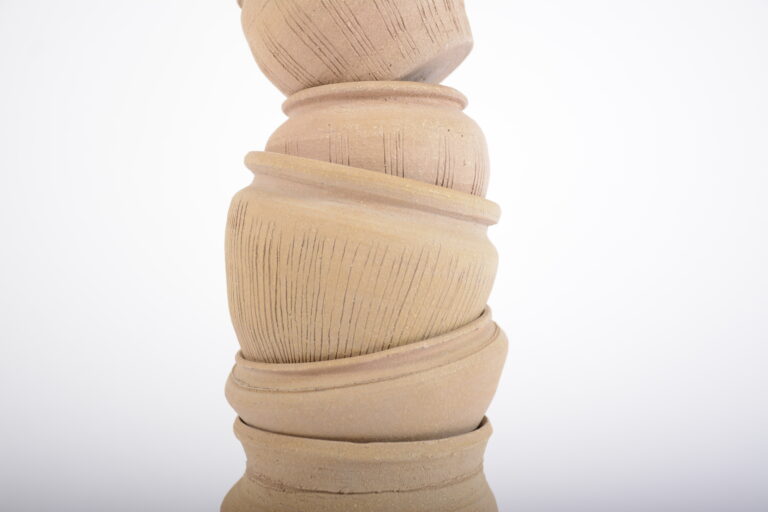
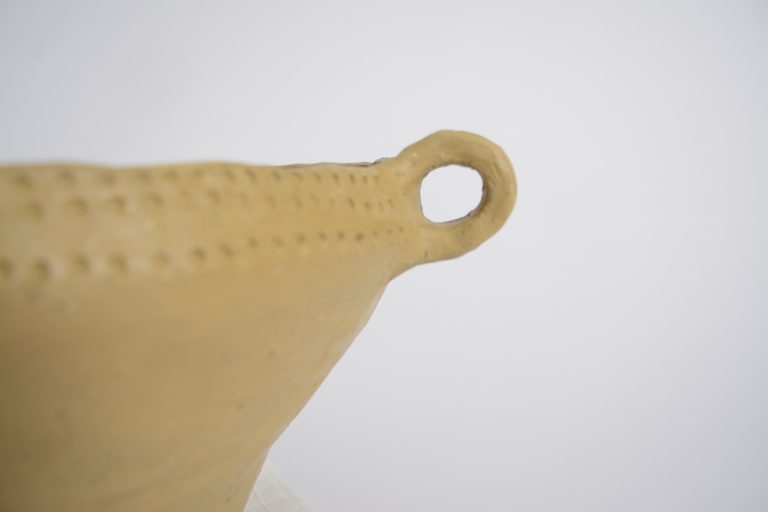
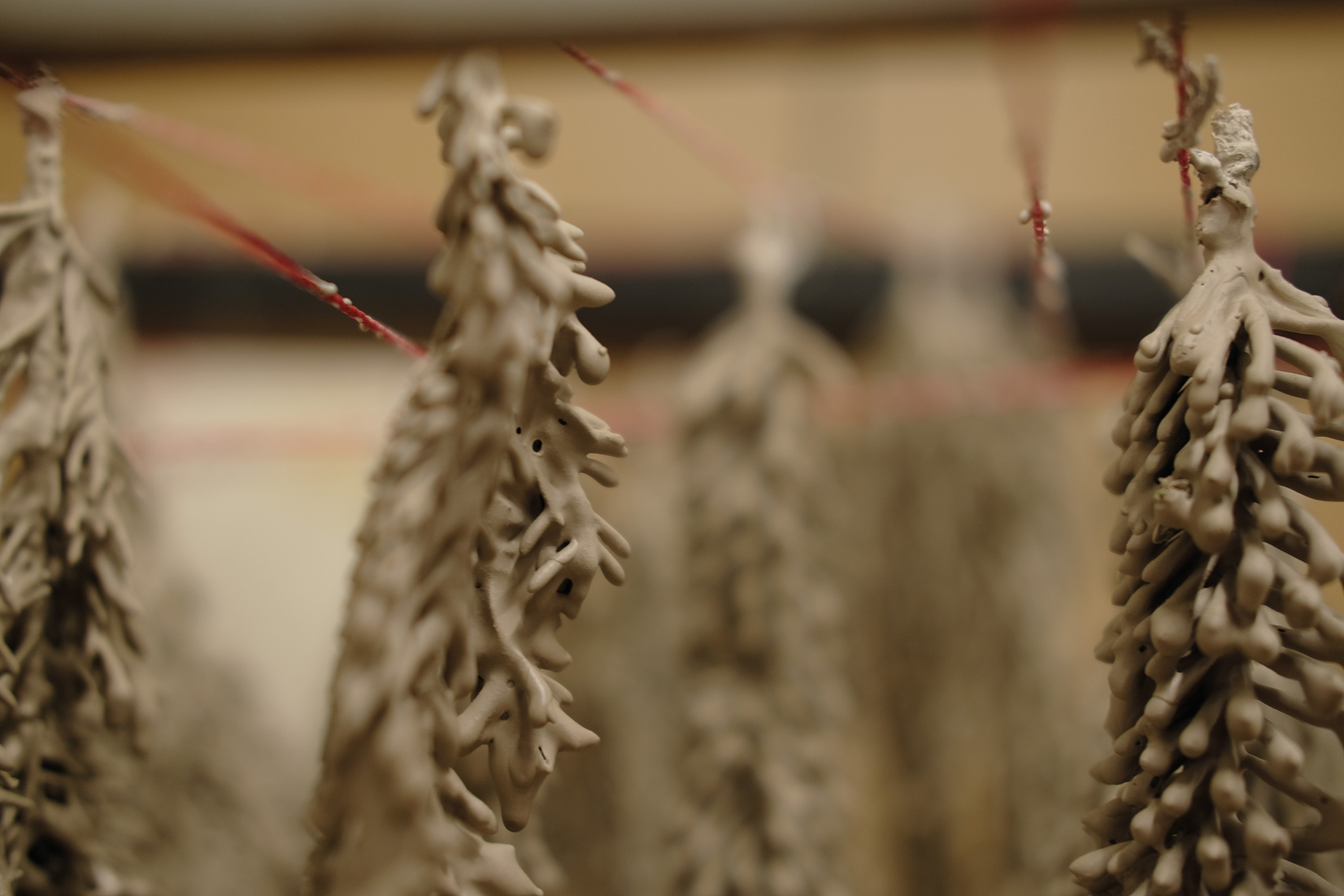
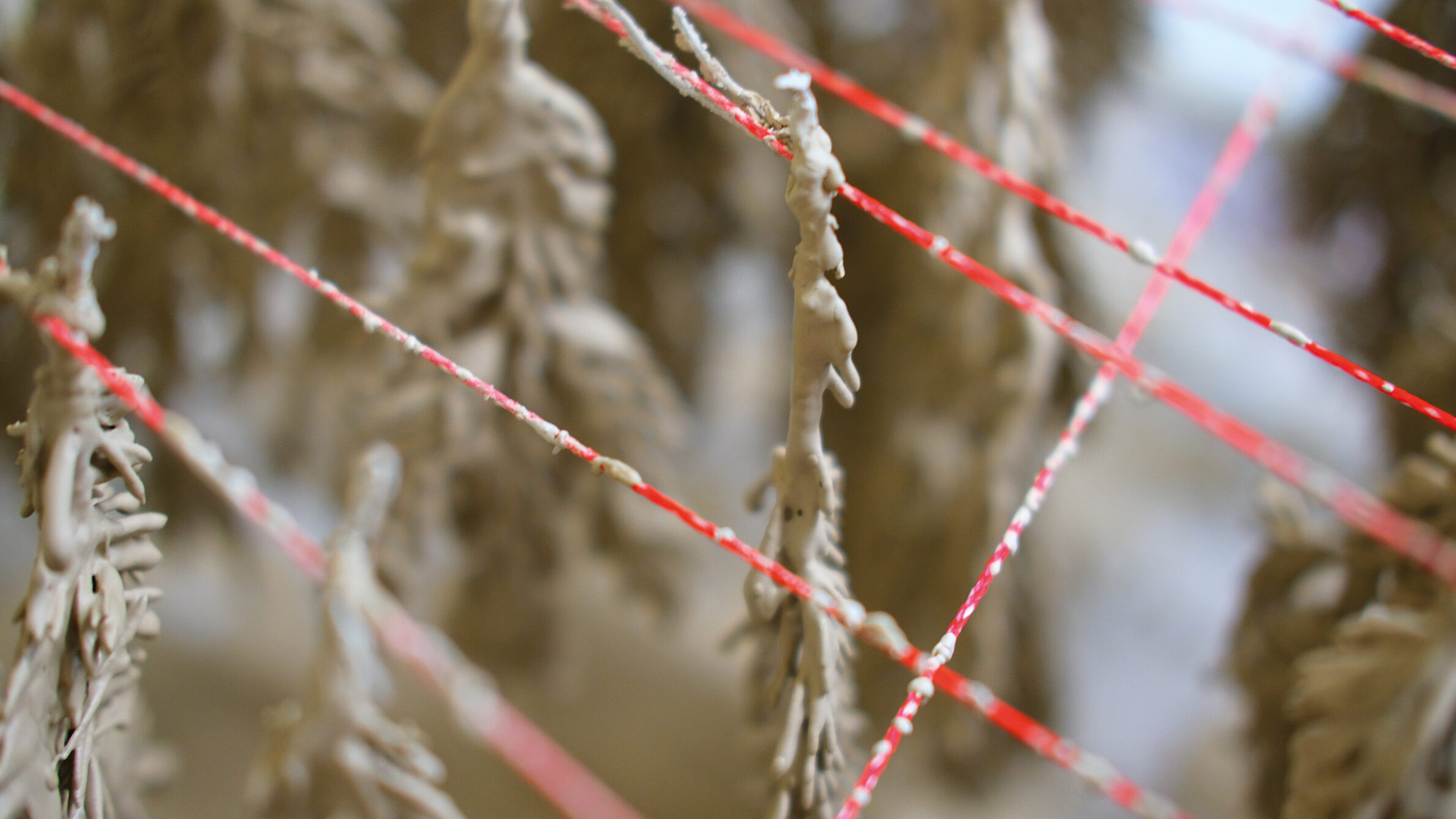
The objects in RHIZOM were made from spruce branches taken from replanted areas of the forest. I coated the branches in porcelain, preserving their needles and structures in a material that transformed something living into something almost archaeological.
The porcelain became a kind of time capsule.
From the outside, the branches appeared almost untouched, pale and delicate. But inside them was something that could no longer remain: the organic material itself would eventually disappear, leaving only its impression behind.
A fragile connection
The branches were suspended from plastic threads.
The choice of plastic was deliberate. It brought another layer of time into the work — the relationship between the forests of the past and a future increasingly dependent on fossil materials.
The branches hang between these two states.
They are no longer living branches, but they are not simply dead objects either. They exist somewhere between preservation and disappearance, between memory and material.
At the centre of the installation stood an old Spitzkraxn, once used by my grandmother for forest regeneration.
It became the physical point where the different generations met.
What remains
One of the things that stayed with me most while researching RHIZOM was how much of this history exists only through people remembering it.
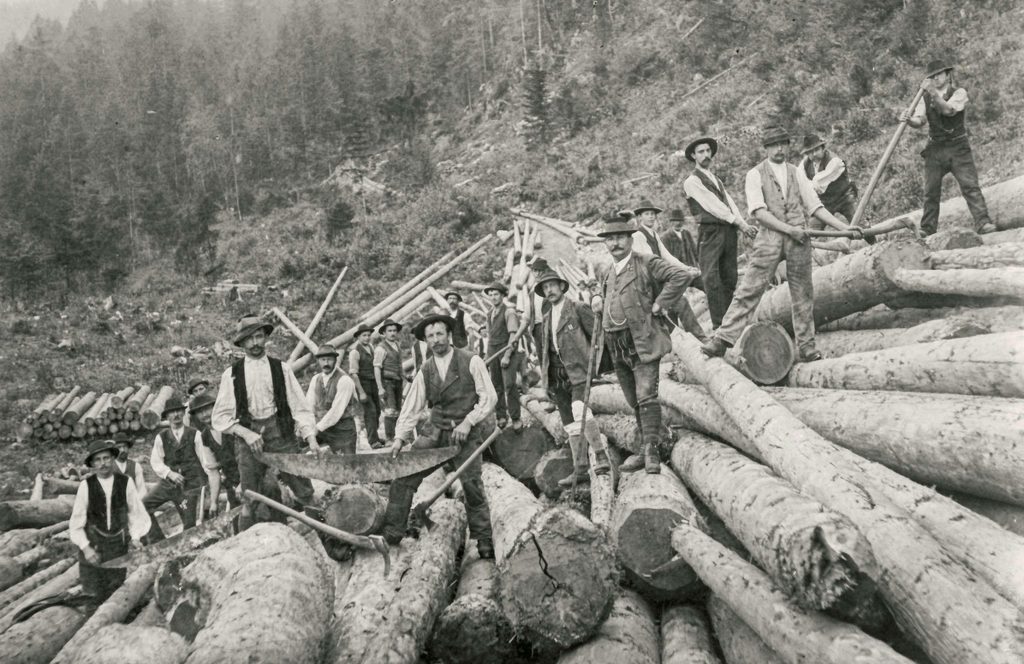
There are photographs and chronicles. There are tools and places. But there are also stories that disappear when nobody asks for them anymore.
The history of forestry is often told through the work of men — felling, transporting and processing timber. RHIZOM looked instead toward the women whose labour was necessary for the forest to continue: carrying seedlings, climbing the slopes, planting and helping to regenerate what had been cut down.
Their work was not separate from the history of the forest.
It was part of its continuation.
This is perhaps why the rhizome became such an appropriate image for the work.
What grows above the ground is only possible because of what remains underneath.
RHIZOM was made in 2023/24, but the questions behind it have stayed with me.
How do places shape us?
What do we inherit without realizing it?
Which stories survive, and which disappear?
And how can material become a way of remembering?
These are questions I continue to return to.
Field Notes — RHIZOM
2023/24 · ceramic installation · porcelain · spruce · wood · plastic · oral history