Field Note 1. — A Vessel Reconstructed
Reconstructing a Lasinja Vessel
Form study · Archaeological reconstruction · Contemporary ceramics
Before a historical vessel can become a source of inspiration, it needs to be looked at closely.
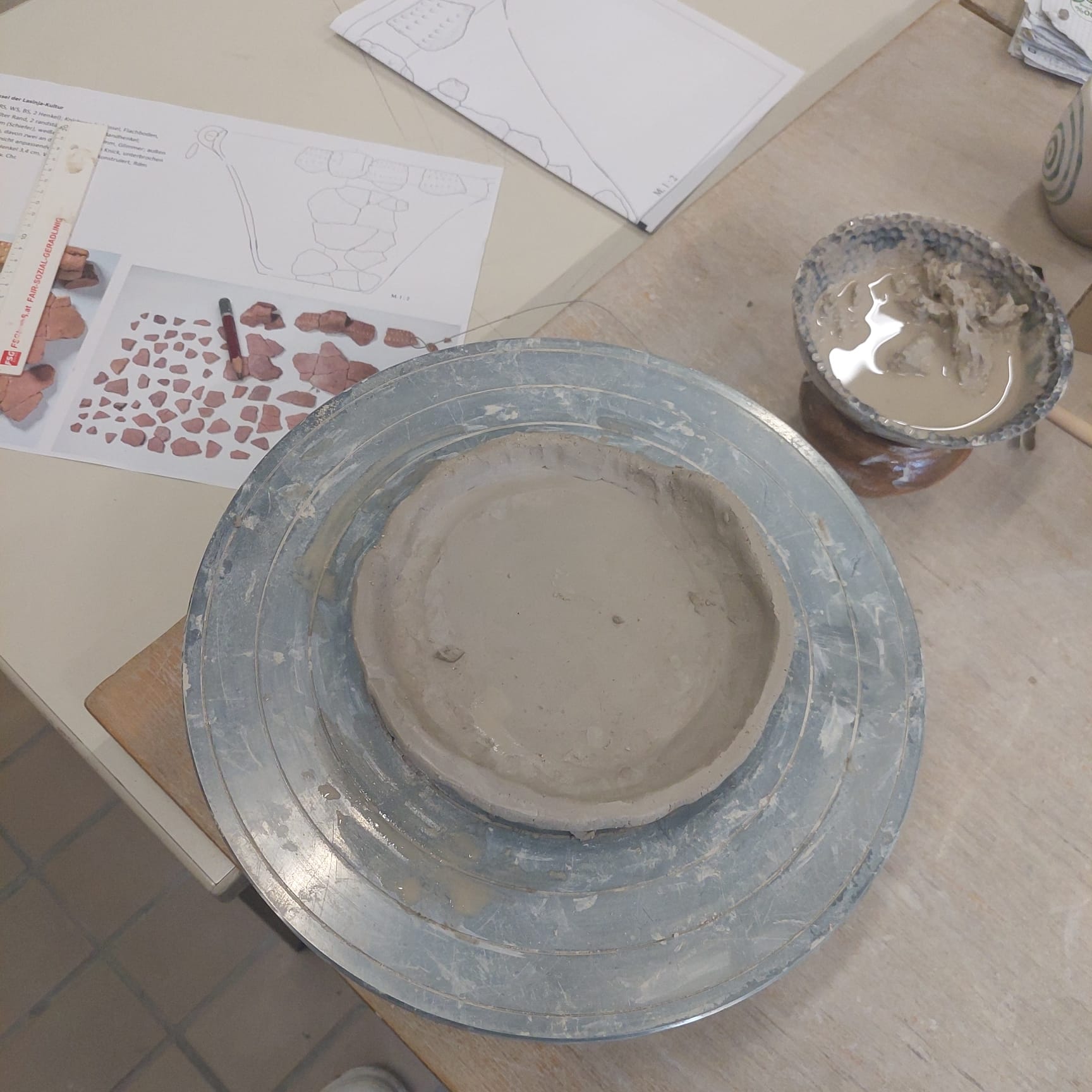
This study began with fragments of a large Lasinja-Kanzianberg vessel, dated to approximately 4300–3900 BC. The archaeological object survives only in fragments, with its original form reconstructed through the remaining pieces.
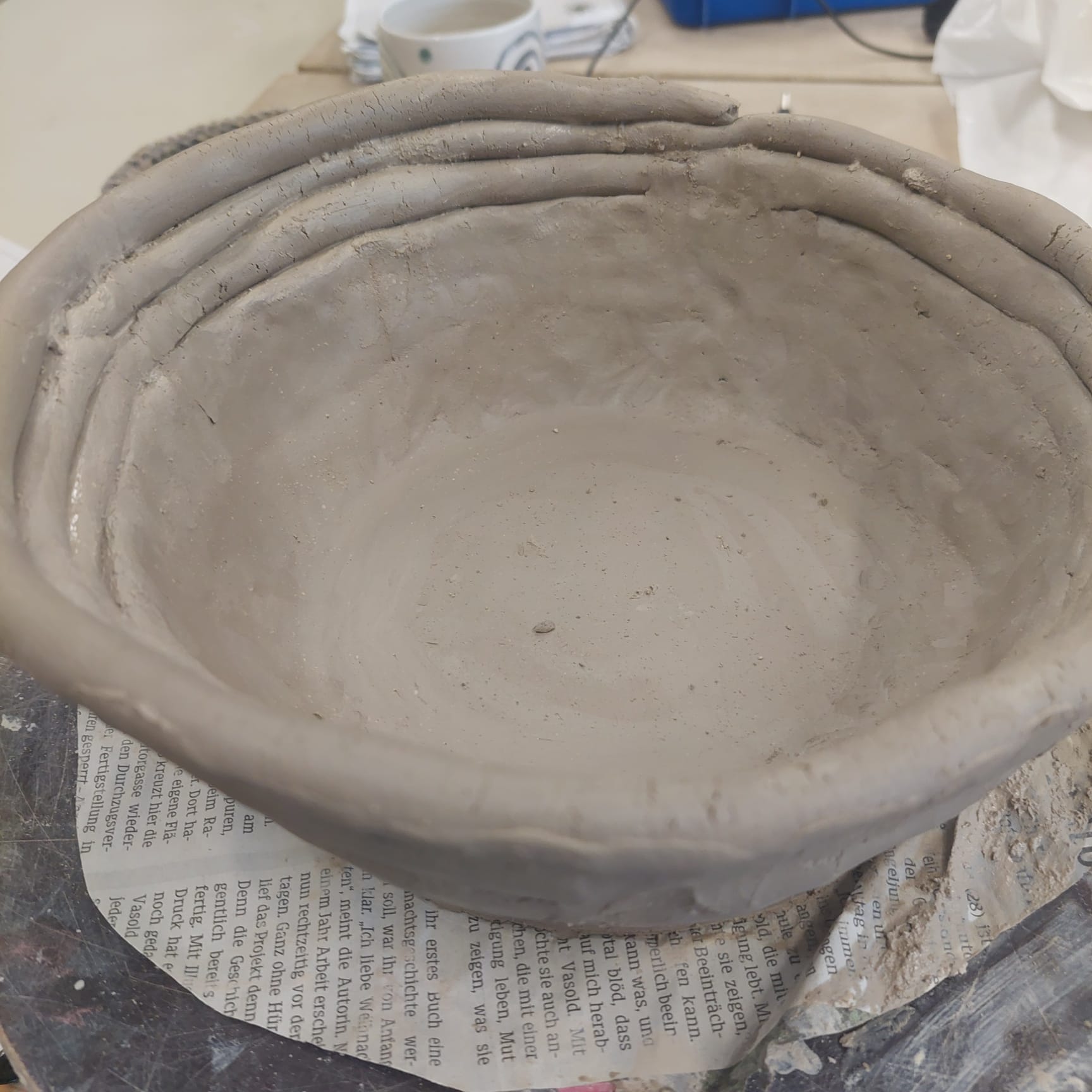
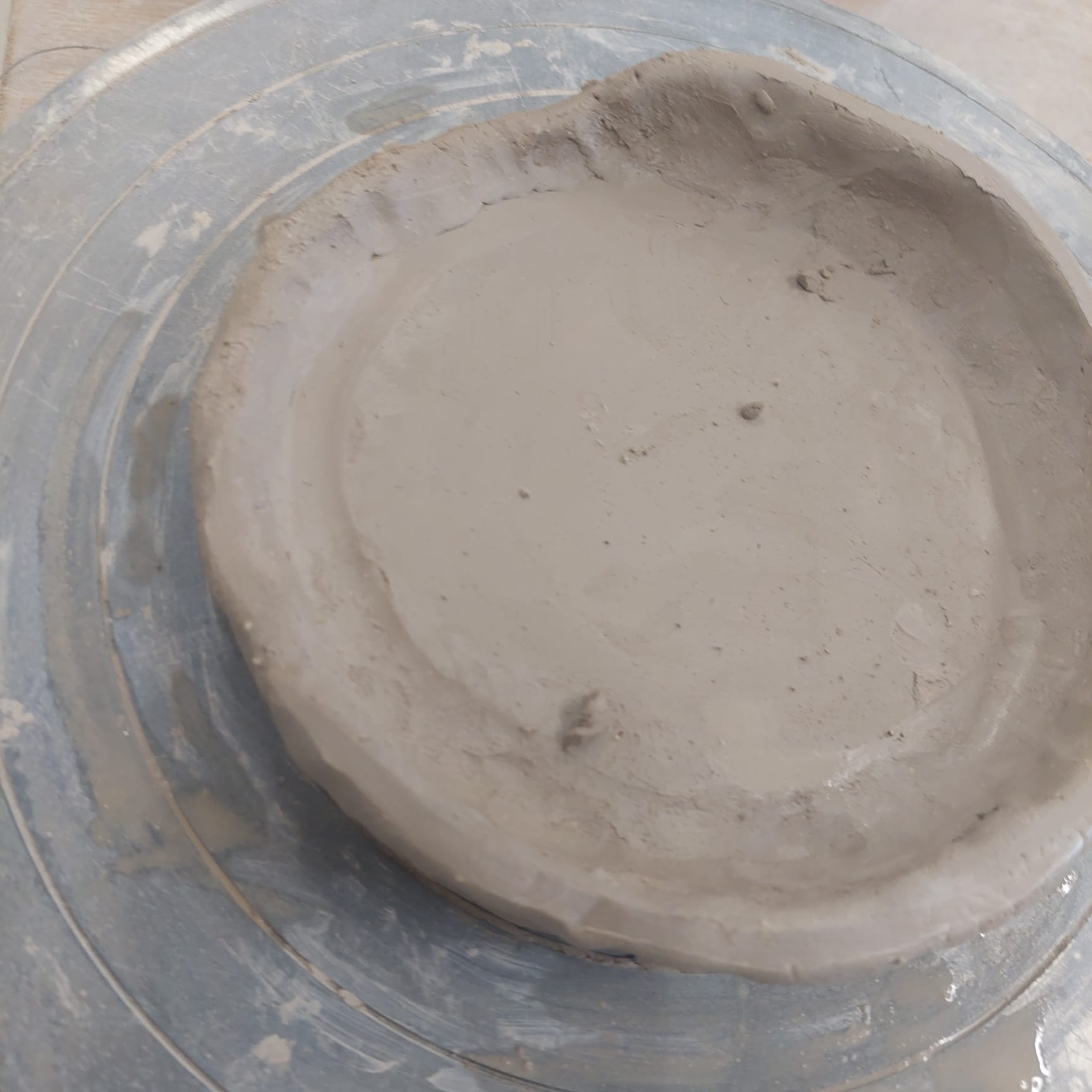
Rather than attempting to create a perfect archaeological replica, I approached the vessel through making.
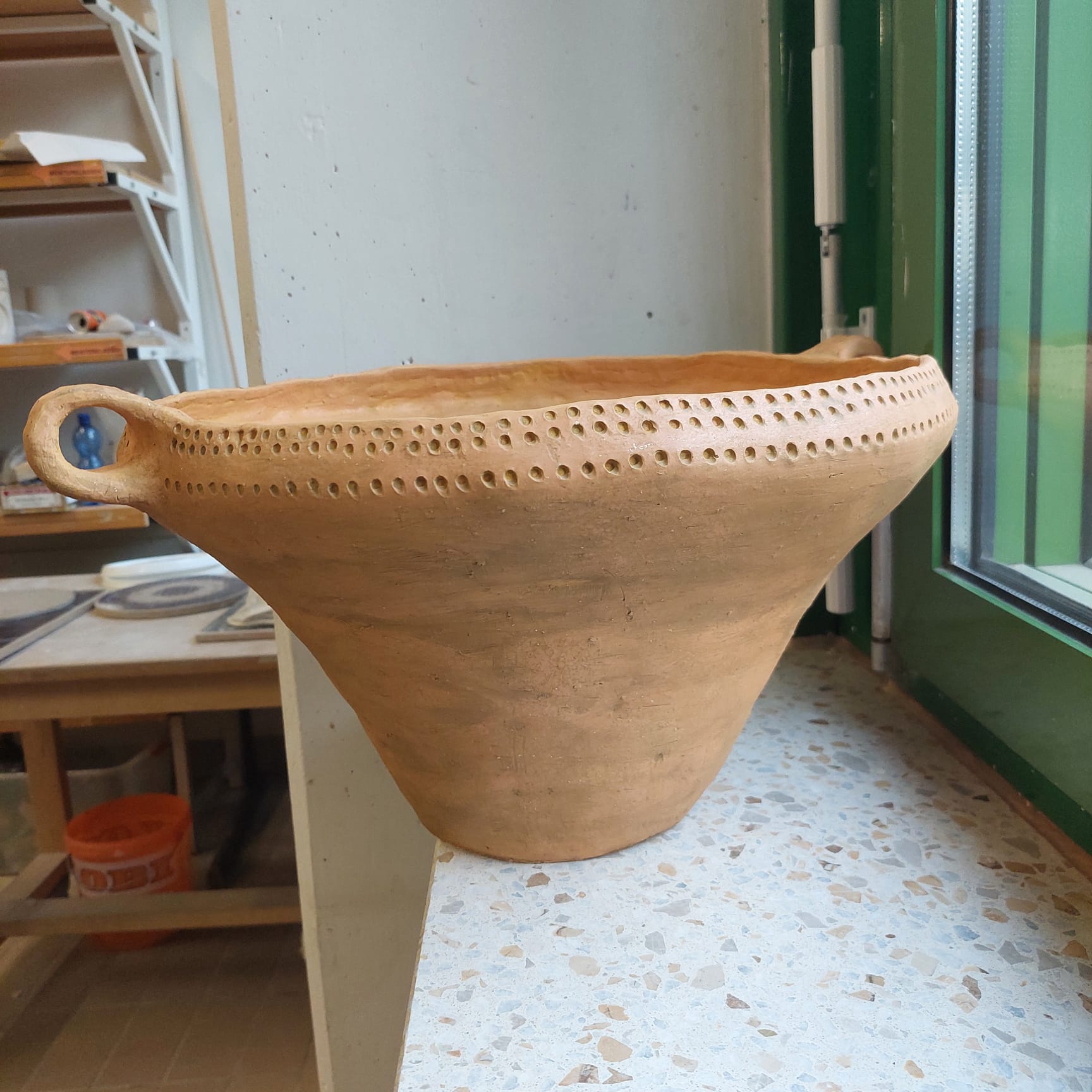
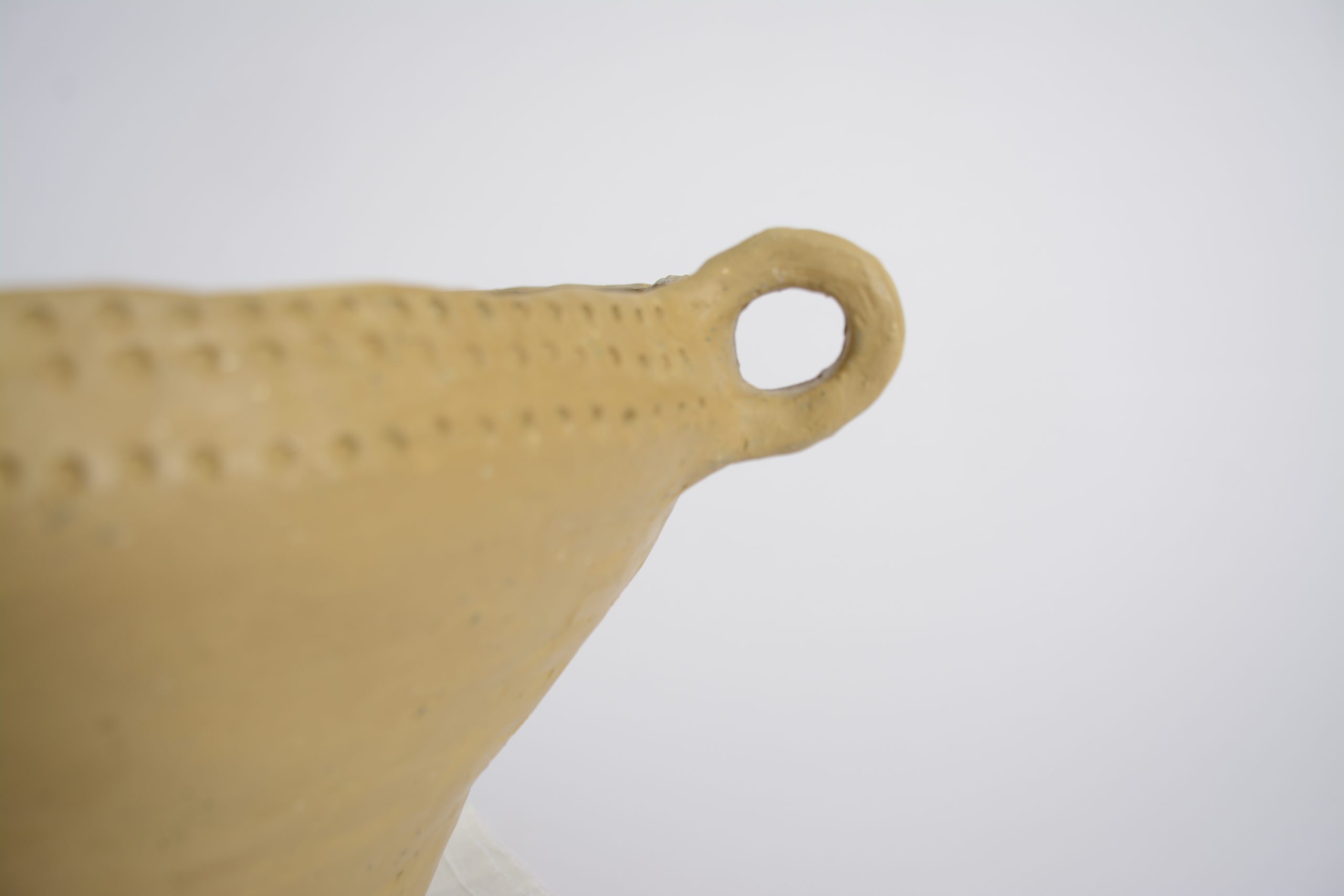
Working with clay allowed me to understand aspects of the form that are difficult to perceive from photographs or drawings alone: the tension of the rim, the transition between the wide upper body and narrow base, the weight of the handles, and the rhythm created by the rows of small punctures around the vessel.
Learning Through Reconstruction
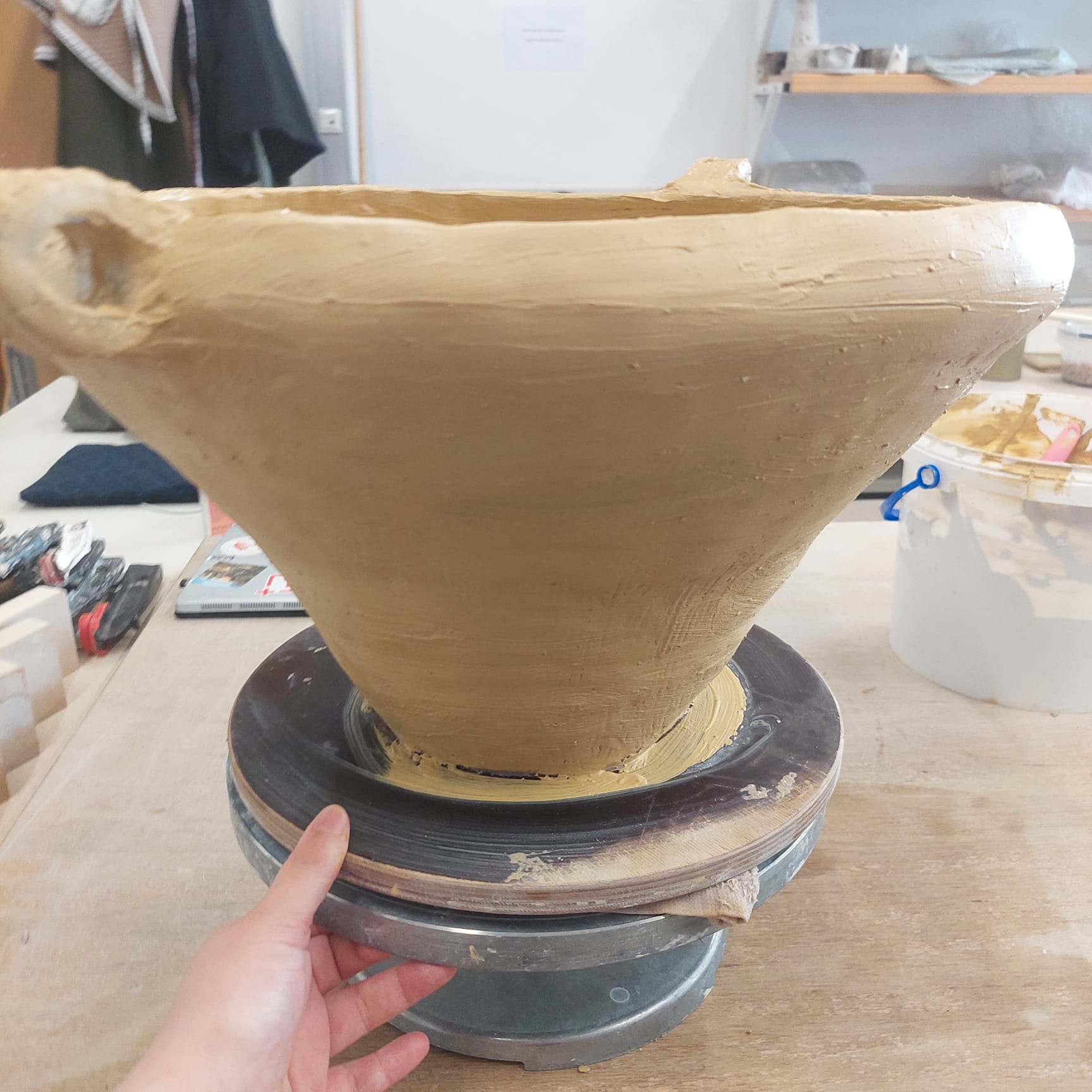
The reconstructed vessel has a distinctive profile.
Its body opens widely towards the rim before narrowing dramatically towards a small, flattened base. Two horizontal handles extend from either side, while several rows of small punctures run around the upper section of the vessel.
These details are not merely decorative.
The punctures create a rhythm across the surface and emphasise the horizontal movement of the rim. At the same time, the handles interrupt this rhythm and give the otherwise continuous form a clear direction.
What interests me is the relationship between these elements:
body · rim · handle · incision · rhythm
Each one changes how the others are perceived.
From Fragment to Form
One of the most fascinating parts of the process was working from fragments.
Archaeological fragments contain information, but they do not provide the entire object. They leave gaps.
Reconstructing them therefore involves observation, comparison and interpretation.
How steep was the original wall?
How wide was the vessel?
How did the curve continue beyond the surviving fragment?
How thick would the rim have been?
These questions become physical when working with clay.
The reconstruction becomes a form of research through the hands.
The Surface as Evidence
The punctured decoration is one of the elements that immediately caught my attention.
Hundreds of small impressions form several bands around the upper part of the vessel. Their repetition creates something almost systematic, while the handmade quality prevents the pattern from becoming completely regular.
This tension between order and irregularity is particularly interesting to me.
The individual marks are simple. Together, they create a complex surface.
It is a reminder that decoration does not necessarily have to be elaborate to transform a vessel. Repetition, spacing and rhythm can be enough.
A Contemporary Interpretation
For me, reconstruction is not the final destination.
It is a way of understanding a form before changing it.
By physically rebuilding the vessel, I can identify the qualities that continue to interest me: the unusual proportions, the strong horizontal rim, the small handles, the transition from a broad body to a narrow base, and the rhythmic treatment of the surface.
These elements can then move beyond reconstruction.
I am interested in what happens when archaeological forms are translated rather than copied.
A historical vessel does not need to become a replica in order to remain present. Its proportions, gestures, construction methods or surface language can become starting points for something contemporary.
From Artefact to New Work
This study forms part of an ongoing investigation into historical ceramics and the possibilities they offer within contemporary practice.
The process can be understood as a chain:
artefact → fragment → reconstruction → observation → abstraction → new vessel
The reconstruction makes the past tangible.
The next step is to let it change.
Rather than reproducing the Lasinja vessel exactly, I want to carry certain aspects of it forward — the compact proportions, the articulated rim, the rhythmic punctures and the strong relationship between surface and silhouette.
The historical object becomes a starting point rather than an endpoint.
The reconstruction is not the finished object.
It is the trace from which something new can begin.
Study / Lasinja Culture
Reconstruction based on archaeological fragments of a large Lasinja-Kanzianberg vessel, dated approximately 4300–3900 BC.
Material: Ceramic
Process: Hand-built reconstruction
Study: Historical form, proportion, surface and archaeological reconstruction